Where Britain’s Rubbish Goes / Telegraph Magazine 12.2025
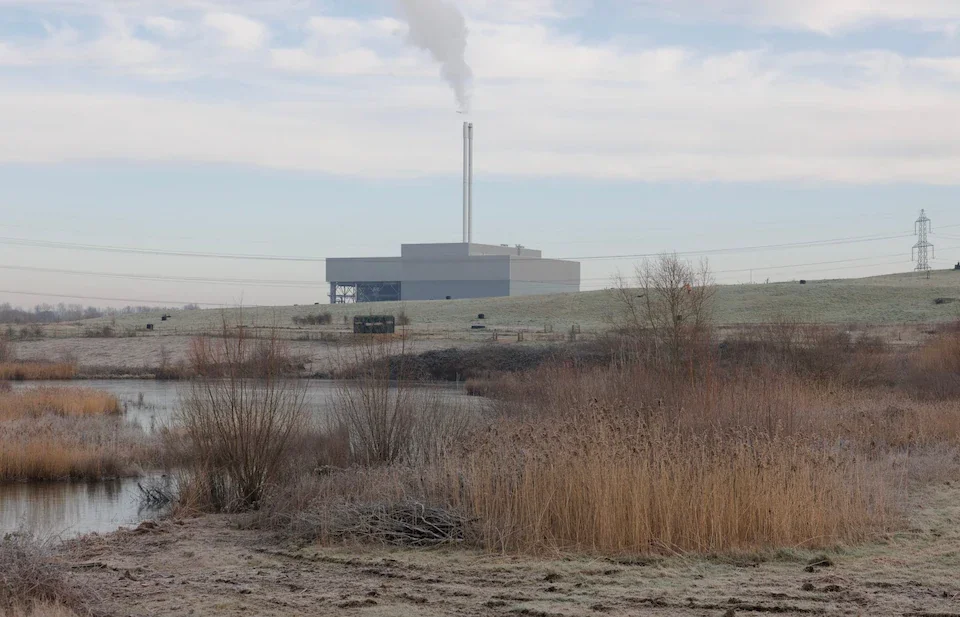
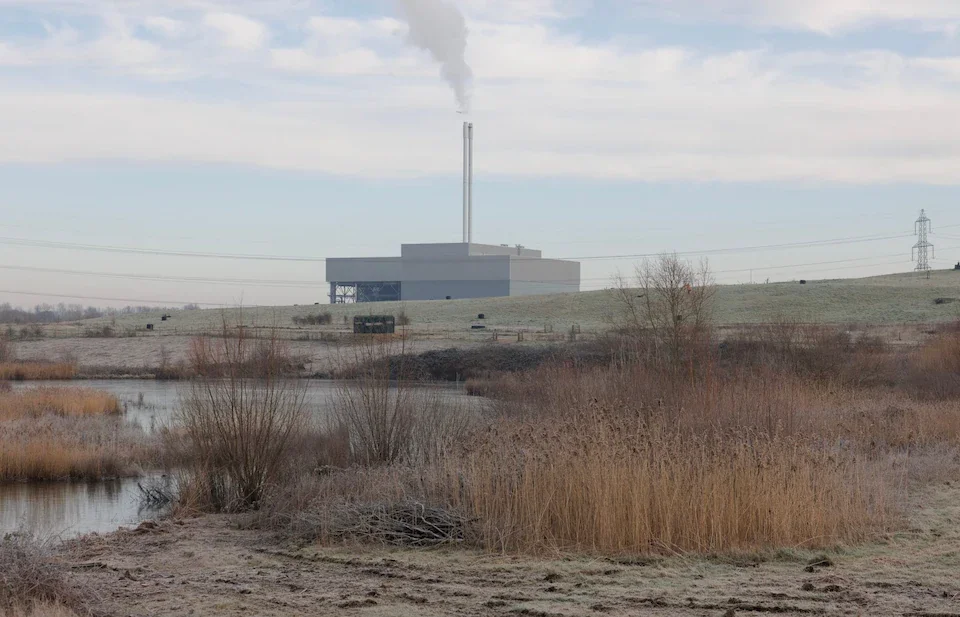
uphemistically-named Energy Recovery Facility - or what most people would call an incinerator - stands in Beddington Lane in the South London borough of Sutton. It is a huge, windowless, monolithic grey structure ringed by a spiked steel fence, guarded by security cameras and topped by two very tall chimneys, with a queue of waste lorries waiting outside to deliver their cargoes.
Critics would say that it is also a symbol of so much that is wrong with England’s efforts to dispose of its mountains of household waste.
The giant incinerator was commissioned by four local councils - Sutton, Kingston, Merton and Croydon - and opened in 2019. Sutton’s Liberal Democrat-controlled council announced that it would process 275,000 tonnes of non-recyclable waste a year, and that the heat it generated could serve thousands of homes. The £990 million, 25-year contract also obliged Viridor, the waste management company that built and operates the incinerator, to turn a large landfill site adjacent to the plant into a nature reserve.
Those fine ambitions have yet to be fulfilled. The nature reserve has yet to be completed because Viridor sold the former landfill site in 2022. For various reasons, the incinerator will not heat any homes in Sutton until at least 2027. Between 2022 and 2024 it breached its nitrous oxide emission limits 916 times due to what Viridor calls a regrettable “human error” by an accredited sub-contractor (the Environment Agency reduced Viridor’s ‘compliance rating’ from A to E).
Viridor has nonetheless persuaded the EA to raise the amount of waste it is permitted to burn in Beddington Lane from 302,000 tonnes a year to 347,000, and is now applying to raise that ceiling once more to 382,000 despite Sutton council’s opposition.
Meanwhile, local residents complain of the noise and smell. “Every now and again it breaks down and makes a horrible drive-you-crazy noise,” says John Turrell, 73, a disabled retired mechanic with breathing difficulties who lives in Therapia Lane, a row of cottages in the incinerator’s shadow. Often, especially in summertime, “the smell is diabolical…It’s like opening a bag of compost. Sometimes it burns your throat. It’s toxic.”
Circumstantial evidence also suggests the building of the incinerator may have undermined the council’s recycling efforts. Coincidentally or not, Sutton’s recycling rate has fallen from 52 per cent in 2017 to barely 41 per cent last year. In Merton, four years ago, local activists placed two GPS trackers in high street recycling bins and both ended up in Beddington Lane.
Viridor insists that it takes its responsibilities very seriously, runs a tightly regulated plant and is “committed to the communities” of the so-called South London Waste Partnership formed by the four councils.
Elliot Coburn, the area’s Conservative MP until defeated at the last election, would beg to differ. He says complaints about the incinerator consumed many hours of his four years in office, and believes Viridor has acted in bad faith: “They have clearly rowed back on many of their initial promises. Many of the so-called benefits have not materialised.”
Nick Mattey, an independent councillor for Sutton’s Beddington ward, calls Viridor “environmental cowboys who are very smart at exploiting councils anxious to save money”.
Even Sutton Council’s initial enthusiasm appears to be waning. Barry Lewis, its leader, wrote to Pierre Dorel, Viridor’s managing director, in August to complain that “Viridor has forgotten the wider community in Beddington, demonstrating little desire to educate or communicate with residents about the facility’s operations, site management and critical operational issues”. He demanded “a significant change in your approach in order to restore public trust”.
On October 25 the incinerator breached its emissions limits once again, when the burning of a load of “non-conformable waste” - thought to be plasterboard - coincided with a “temporary blockage of the flue gas abatement instrumentation” to produce an excess of sulphur dioxide.
****
Those who live near Beddington Lane are far from the only people to live close to industrial-sized municipal waste incinerators. Over the past decade or so those ‘Energy Recovery Facilities’ have proliferated, most often in deprived areas where opposition tends to be less well organised and financed.
In 2015 there were 34 in England, with a combined burning capacity of 9.7 million tonnes a year. Now there are 55 with a capacity of more than 17 million tonnes per year. A dozen more are under construction.
That is bad news. Broadly speaking, the more waste the country burns, the more harmful emissions it produces and the less it recycles. Right now, fully half of England’s municipal waste is incinerated even though three-quarters of that could potentially be recycled.
And while most modern incinerators do indeed convert heat into electricity, incineration is almost as dirty a way to generate power as coal, which the UK ceased using for that purpose in 2024.
Some critics even compare the incineration industry to the water industry. They argue that in both cases the leading companies are mostly foreign-owned, polluting and poorly policed by the Environment Agency. (Viridor is owned by KKR, a global private equity firm, Veolia and Suez by French consortiums, FCC Environment by a Spanish conglomerate and Biffa by an American investment company).
“Incinerators undermine recycling efforts, exacerbate climate change, harm air quality and are bad neighbours due to noise, traffic, vermin and flies,” says Schlomo Dowen, national coordinator of the UK Without Incineration Network (UKWIN). The companies that run them “make big profits at the expense of both the public health and public purse,” he adds.
Ian Williams, a professor of applied environmental science at Southampton University who has written papers on the subject, says that "socially, environmentally and economically, incineration is an undesirable way of disposing of our waste, and we have to reverse its unnecessary growth." He says of the waste companies: “They don’t give a shit about what happens to British air quality, waste, anything. They just want a long term return on their investment.”
Needless to say, the industry itself strongly rejects that characterisation. Jacob Hayler, head of the Environmental Services Association which represents the recycling and waste industry, says Britain’s incinerators are “stringently regulated, very tightly monitored and run to a very high standard”.
He insists that they are “doing a really important job in terms of treating our waste and making sure we maximise the benefits we get from it, including the provision of power and heat to local communities”.
****
The UK is a wasteful country - literally. It presently generates between 25 and 30 million tonnes of household waste a year, or something approaching 400 kilos per person.
In the late 20th century we dumped most of that waste in landfill sites. There were more than 20,000 of them scattered around the UK, many of them polluting ground water and producing potentially combustible and environmentally damaging methane gas. “The waste industry, probably until the late 1990s, was highly criminal - and I mean highly criminal,” says Williams. “The law was broken all the time.”
Then, in 1999, a European Union directive imposed draconian restrictions on landfills and set statutory targets for diverting waste elsewhere. Tony Blair’s government responded by introducing a steep tax on landfills, promoting recycling and subsidising the building of new incinerators in England. At that point the recycling sector was still in its infancy and incineration was the only viable alternative. It was “a necessary evil,” says a source within the industry.
Over the following decade the recycling rate for municipal and household waste in England rose steadily from 12 to 40 per cent, but as the newly-commissioned incinerators came into operation they offered cash-strapped local authorities a swifter, easier and arguably cheaper alternative to recycling. Between 2010 and 2020 the amount of waste incinerated in the UK nearly trebled as England’s local authorities became contractually committed to incineration.
To build an incinerator can cost two or three hundred million pounds, so the waste companies demanded contracts from those local authorities that would ensure a decent, guaranteed return on their investment.
As in the case of Beddington Lane, those contracts would typically last for 25 to 35 years. They would guarantee the delivery of a minimum tonnage of waste each year, with councils liable to financial penalties for failing to provide that ‘feedstock’. They offered the waste companies protection against changes in rules and regulations, and made the councils responsible for decommissioning the incinerators at the end of their lives.
“If the companies own incinerators with a 25 or 30 year contract, with guaranteed waste going into them and penalties for not providing it, what’s not for them to like?,” says Williams.
“Incinerators are basically bonfires in expensive boxes, and the waste companies persuaded councils up and down the country to pay for the construction of those boxes. They couldn’t lose,” says UKWIN’s Dowen.
A recent BBC freedom of information request revealed that local authorities entered into at least £30 billion worth of contracts with waste companies - with unfortunate consequences.
Between 2010 and 2020 the amount of household waste that English local authorities sent to incinerators soared to more than 50 per cent of the total, while the recycling rate plateau-ed. It now hovers at around 44 per cent.
“Compared to most developed countries in the world, that's shocking,” says Williams. And while official figures are hard to come by, he says it is “undoubtedly the case that a certain amount of the waste that conscientious homeowners put out for recycling ends up in incinerators - perhaps six to 12 per cent”.
England’s sorry recycling record contrasts starkly with that of Wales, where the devolved government chose to prioritise recycling over incineration following the EU’s 1999 directive. As a result, the principality now recycles about 60 per cent of its municipal waste and has just two incinerators for burning whatever is left over. Indeed, Wales is one of the top three recyclers in the world.
“There is an obvious correlation between high rates of incineration and low rates of recycling across England. Where the rate of incineration is high, the rate of recycling is low and vice versa,” UKWIN asserts.
“The evidence is pretty clear that the increase in incineration capacity does absolutely nothing for recycling rates,” says Colburn, the former Tory MP who became a waste disposal expert thanks to the Beddington Lane incinerator.
Much of the waste sent to incinerators is, in fact, recyclable. A report by the Department for Food, Environment and Rural Affairs (DEFRA) states that “of total residual waste from household sources in England in 2017, an estimated 53 per cent could be categorised as readily recyclable, 27 per cent as potentially recyclable, 12 per cent as potentially substitutable and eight per cent as difficult to either recycle or substitute”.
In other words, incinerators destroy plastics, paper, cardboard, glass and other materials that could be recycled, reused and ploughed back into what is called the ‘circular economy’. But incineration does more than damage just recycling efforts.
****
Like Beddington Lane, most modern incinerators now convert heat to electricity - they presently contribute three per cent of the UK’s entire energy supply. But that electricity is the ‘dirtiest’ and most ‘carbonised’ that the national grid receives now that the government has shut all coal-fired power stations.
Every tonne of plastic burned creates at least an equivalent amount of CO2, a greenhouse gas, and UKWIN estimates that the ‘carbon intensity’ of energy produced through waste incineration is 23 times greater than that produced by wind or solar. But none of Britain’s incinerators have yet installed effective carbon capture and storage systems because the technology is still at an experimental stage.
What all the incinerators do have are filters, scrubbers and absorption pads to remove particulate matter - essentially soot - from their emissions. However those filters cannot capture the smallest particles which penetrate the lungs and are arguably the most damaging to human health.
At this point the narratives of the waste industry and its critics diverge sharply.
Jacob Hayler of the ESA says that the incinerators are “among the most highly regulated in Europe and therefore the world”, and that “the contribution of pollutants from these facilities is a tiny fraction of a per cent of the general emissions in the UK”.
Another senior source within the industry, speaking on condition of anonymity, accepts that the incinerators are “not 100 per cent beautifully clean” because “nothing in industry ever is”. He also acknowledges that some waste companies perform better than others. But he argues that the incinerators operate within the legal limits and regulatory framework established by the government.
“I appreciate that campaign groups might not always feel that the emission targets are ideal, or stretching enough, but that’s a constant debate that goes on between us, the regulator and those that challenge us,” he says.
Campaign groups certainly do not regard those emission limits as ideal, contending that they are laxer than those of the EU or those recommended by the World Health Organisation - another point contested by the industry.
Even then, they say, incinerator operators still breach them. Official statistics suggest that in 2024 there were at least 340 breaches detected across England, excluding those at Beddington Lane. Industry sources say most were probably minor and caused by sudden spikes in materials like plastic bottles after Christmas.
The critics argue, moreover, that the Environment Agency, the body that is supposed to monitor the incinerators and enforce the emissions limits, has been so crippled by budget cuts that - as with the water industry - it can no longer carry out its duties satisfactorily.
Every incinerator has to produce regular reports detailing its emission releases, but the EA makes few on-site inspections, and those it does make are usually arranged in advance so the incinerator operators have time to prepare. A 2023 Freedom of Information request by UKWIN revealed that two-thirds of England’s incinerators had never had an unannounced inspection.
Dowen contends that the EA is biased in favour of the operators, and “every benefit of the doubt is given to the industry and not to citizens”.
Colburn, the former MP, says the EA is “understaffed and underresourced” and asks: “What on earth is the point of this regulator. It’s done literally nothing on not just my incinerator, but as far as I can tell on any of them.”
****
In Westminster there is now a belated but growing recognition that the exponential growth of incineration as a means of dealing with the country’s municipal and household waste needs to be reversed.
In 2023 the then Tory government set a statutory target of halving the amount of waste sent to landfill sites and incinerators by 2042. In their 2024 general election manifestos the Conservatives, Liberal Democrats and Greens promised a moratorium on the construction of new incinerators - something that already exists in Scotland and Wales.
The present Labour government has announced that new incinerators will only receive planning approval if they meet tough new environmental standards. It also plans to include incinerators in the UK emissions trading scheme from 2028, which means their operators will have to pay a ‘tax’ for every tonne of CO2 produced by burning plastics, and will launch a deposit return scheme for cans and plastic bottles in 2027 so they can be recycled.
“For far too long, the nation has seen its recycling rates stagnate and relied on burning waste, rather than supporting communities to keep resources in use for longer,” Mary Creagh, a junior minister at Defra, declared last December.
Those measures should lead to a sharp reduction in the amount of household waste being sent to incinerators, but that could cause a whole new set of problems within England’s waste sector.
The incineration industry is already suffering from overcapacity. A dozen more incinerators are being built, and the government is granting approval for yet more.
One egregious example is Portland Port near Dorset’s Jurassic Coast World Heritage Site. The country council refused a developer permission to build a large incinerator for which there was no obvious need, but in September last year the Ministry of Housing, Communities and Local Government overturned that decision.
“You have this completely ridiculous situation where you have a county with one of the highest recycling rates in the country, that doesn’t need an incinerator and has objected to it being built, being forced to have one to deal with other people’s waste from other parts of the country,” says Williams. “We don’t have to build one more incinerator, not one.”
The government has no apparent strategy for dealing with this looming overcapacity, preferring to let market forces prevail.
The ESA’s Hayler is sanguine. He expects the construction of new incinerators to cease in another two or three years while older ones are decommissioned and others adapt and specialise. Moreover, he argues, the waste industry is about much more than just incineration and actively exploring ways to promote recycling, repair and reuse.
Others are less optimistic. UKWIN’s Dowen fears the industry will start importing waste from abroad to keep its incinerators going (a Norwegian company, Geminor, is already exploring the possibility of shipping waste from Italy to the UK).
“The UK is perfectly positioned to be Europe’s dumping ground,” he warns. “Residents around Beddington Lane are currently experiencing pollution from domestic waste. In future they could be experiencing pollution from imported waste.”
Williams of Southampton University envisages a scenario where England’s local authorities will incur hefty financial penalties because they can no longer fulfill their contractual obligations to provide incinerators with guaranteed amounts of waste.
"We're potentially facing an absurd situation where British taxpayers will have to bail out local authorities for providing insufficient feedstock to incinerators that are polluting our air, undermining our recycling efforts and completely at odds with our efforts to achieve net zero,” he says. “It's insanity - complete insanity."