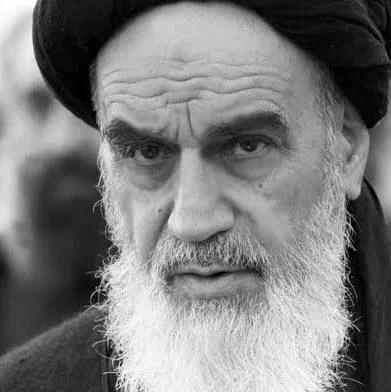
Ayatollah Ali Khamenei / The Times
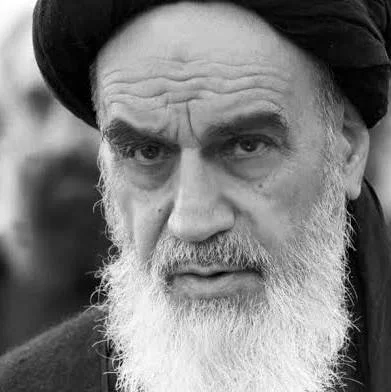
For more than three decades Ayatollah Ali Khamenei was the shadowy, enigmatic but omnipotent Supreme Leader of the Islamic Republic of Iran.
Unelected and unaccountable (except, he would say, to God), he quietly manipulated all the levers of power in an oil-rich nation of 85 million people, prompting one observer to describe him as “part Pope, part commander-in-chief and part one-man Supreme Court”.
Holding sway from a compound of some 50 buildings called Beir Rahbari on Palestine Street in central Tehran, he astutely played reformers off against hardliners (though as a conservative himself he generally favoured the latter and used the former as a pressure-valve).
He routinely denounced the US and Britain as the ‘Great’ and ‘Small Satans’. He sponsored militant anti-western Islamic groups in Iraq, Lebanon and Syria. And all the while he approved the development of a clandestine nuclear weapons programme that would, if ever completed, threaten Israel’s very existence, destabilise the Middle East and imperil global oil supplies.
Year after year the bespectacled, white-bearded, black-turbanned cleric kept the world guessing about his true intentions, not least because so little was known about him. He never travelled abroad. He very seldom received foreign leaders, and certainly not those from western or non-Muslim countries. He gave no interviews, and was sparing in his public appearances and pronouncements.
Even his personal life was opaque. He was said to live an austere, ascetic existence, and to enjoy gardening, but he also controlled Iran’s oil riches and the vast wealth of assorted Islamic foundations. He was married with four sons and two daughters, but scarcely a single photograph of the women in his family has ever been published.
He was said to have been quite liberal-minded in his youth, but he became increasingly authoritarian as his rule went on, using the security forces brutally to suppress popular protests against rigged elections, a collapsing economy and the draconian enforcement of Islamic laws.
By the end, any pretence that a theocratic regime which overthrew the Shah of Iran in 1979 still commanded widespread popular support and legitimacy was long gone. “Death to the dictator” and ‘Death to Khamenei’ protesters would cry in the streets of Tehran and other cities. Such chants would have been unthinkable in the early years of his long rule when all the cries were ‘Death to America’.
Ali Hosseini Khamenei was born in the holy city of Mashhad, in northern Iran, in 1939. He was the second of eight children. His father was a cleric, his mother came from a clerical family, and his own religious education began at a very young age at a Mashad seminary. He later continued that education at the holy cities of Najaf in Iraq, and Qom in Iran.
As a young man he loved Persian poetry and music, played a traditional stringed instrument called a tar and read western authors including Leo Tolstoy, John Steinbeck, Jean-Paul Sartre and Victor Hugo. Unusually for a cleric, he smoked cigarettes and a pipe.
But he was increasingly influenced by radical Islamist intellectuals who fiercely opposed the secular modernisation programme of the Shah of Iran and the imperial powers who had toppled Mohammed Mossadegh, Iran’s democratically-elected prime minister, in 1953. One of those radicals was Ayatollah Ruhollah Khomeini, who taught Khamenei in Qom and was determined to bring Islamic rule to Iran.
Khomeini was exiled to Najaf in 1964 and later moved to France. During his 14 years away Khamenei continued to spread his message in Iran, and sought to build a national network of militant clerics. So, apparently, did his wife, Mansoureh Khojasteh Bagherzadeh, whom he married the year Khomeini was exiled. She distributed pamphlets, carried messages and hid documents.
Khamenei was by his own account arrested six times, and tortured by SAVAK, the Shah’s secret police. On occasion he shared a prison cell with communist opponents of the Shah. They recalled how he would read the Koran aloud and disliked jokes with sexual themes. He was later sent to the city of Iranshahr in remote Baluchistan province for three years of internal exile.
The Iranian Revolution of 1979 changed everything. The Shah was toppled. Khomeini returned from France in triumph. Khamenei became part of Khomeini’s inner circle as the new Supreme Leader set about building an Islamic Republic amid much violence and turmoil.
He was put on the revolutionary council, named leader of Friday prayers in Tehran and appointed deputy defence minister. On one occasion he took a television crew to the US embassy, where Islamic revolutionaries had seized 52 Americans hostages, to make a propaganda film suggesting they were being well looked after.
He was sufficiently prominent that in 1981 an opposition group, the Mujahadeen-e-Khalq (MEK), attempted to assassinate him. It placed a tape recorder containing a bomb next to him as he prepared to speak at Tehran’s Abouzar Mosque. The device exploded. Khamenei was seriously injured and lost the use of his right arm permanently. “I won’t need the hand. It would suffice if my brain and tongue work,” he said as he recovered.
He later told followers in Tehran: “No-one thought I would survive. I felt that I was at death’s door. In the days that followed I thought ‘Why have I survived?’. And it dawned on me that our heavenly God wanted me to survive for a reason.”
Shortly afterwards the MEK managed to assassinate Mohammad-Ali Rajai, Iran’s president, and Khomeini arranged for Khamenei to replace him. He was ostensibly elected with 97 per cent of the popular vote. The new regime had launched a period of savage repression as it sought to cement its power, and Khamenei used his inaugural address to declare war on “deviation, liberalism and American-influenced leftists”.
Khamenei served as Khomeini’s president and trusted lieutenant for eight years from 1981 to 1989. During almost all that time Iran was fighting a war with neighbouring Iraq during which more than 500,000 soldiers and civilians were killed. He would have noted that Iraq received substantial support from the US and other western countries despite Saddam Hussein’s use of chemical weapons.
In June 1989 Khomeini died after falling out with his chosen successor, Ayatollah Hussein-Ali Montazeri. Khamanei, then aged 49, was constitutionally barred from becoming Supreme Leader because he was only a hojjat al-Islam (a middle-ranking cleric), but a group of senior clerics known as the Assembly of Experts chose him anyway. He was swiftly promoted to ayatollah and the constitution was amended to say that the Supreme Leader had to demonstrate only “Islamic scholarship”.
He was not a particularly popular or inspiring choice. He lacked the stature and charisma of his predecessor. A lot of senior clerics bemoaned his lack of theological authority. But he set to work consolidating his power, not least by empowering and enriching the Islamic Revolutionary Guard Corps with whom he had worked closely during the Iran-Iraq war. As the years passed he allowed the Revolutionary Guards to take control of huge swathes of the Iranian economy including oil refineries, mines and construction companies.
He likewise exerted increasing control over the judiciary, the majlis (parliament), the clergy, the media and other branches of the security services. He developed an extensive network of informers, or commissars, to serve as his eyes and ears in ministries, courts, universities and other state institutions. And over time he was able to stack key bodies including the Guardian Council, which vets all presidential and parliamentary candidates, with loyalists.
In 1997 Mohammed Khatami, a reformer, won a landslide victory in the presidential election and pursued a programme of detente with the West and political, economic and social liberalisation at home. More broadly he sought to establish a clerical democracy, in which the mullahs had a prominent but not decisive role, instead of a tightly-controlled theocracy.
This challenged Khamenei’s absolute power as Supreme Leader. He permitted a few social reforms, but hardline Islamist conservatives in government blocked most of Khatami’s programme, including legislation to give the president control of the judiciary and curb the Guardian Council’s powers. Khamenei himself appeared to remain above the fray.
When Khatami expressed sympathy for the US following the terrorist attacks of September 11 2001 Khamenei made clear that Iran would not support President George W. Bush’s ‘war on terror’ (Bush subsequently described Iran, Iraq and North Korea as an “axis of evil’). In 2004, when Iran succumbed to intense international pressure to allow UN inspections of its nuclear facilities, Khamanei made sure Iran’s chief negotiator, Hassan Rouhani, reported to him and not to Khatami.
Khatami did manage to win a second term in 2001, but the Guardian Council blocked thousands of reformists from standing in the parliamentary elections of 2004 and his presidency ended amid widespread disillusion the following year.
His successor, Mahmoud Ahmadinejad, the ultra-conservative mayor of Tehran, was handpicked by Khamenei. Although Ahmadinejad was largely unknown outside the capital he duly won a run-off election against Akbar Hashemi Rafsanjani, a former president and founding father of the Islamic Republic, with an improbable 62 per cent of the vote. At his inauguration Ahmadinejad kissed Khamenei’s hands in a gesture of loyalty.
Ahmadinejad’s policies seemed closely attuned to those of the Supreme Leader. He was a robust supporter of Iran’s nuclear programme, though he always maintained that it was for peaceful purposes only. Surrounded by potentially hostile countries, some of them with nuclear weaponry, Iran had been seeking a nuclear arsenal of its own since the Shah’s time.
He missed no opportunity to goad the US, and even claimed that it was behind the 9/11 attacks. Khamenei likewise routinely denounced a superpower he called the ‘Great Satan’ and the ‘global arrogance’ to whip up his base and deflect blame for Iran’s economic problems. “We need the United States as an enemy,” he allegedly told Khatami.
Ahmadinejad shared Khamenei’s hatred of Israel, denying the Holocaust and suggesting that the Jewish state should be “wiped off the map”. Khamenei once described Israel as a “cancerous tumour of a state” that “should be removed from the region”.
At home Ahmadinejad and the hated ‘morality police’ cracked down on dissent, human rights groups, and any dress or behaviour deemed ‘unIslamic’. He assiduously courted the devout rural poor at the expense of the urban middle classes, though he did so by recklessly spending Iran’s record oil revenues and causing rampant inflation.
Backed by the Supreme Leader, Ahmadinejad’s re-election in 2009 looked like a foregone conclusion, but it did not turn out like that. The Guardian Council allowed three relatively moderate conservatives including Mir Hossein Mousavi, a former prime minister, to run against him. An overconfident regime permitted a genuinely open campaign, with television debates and huge rallies of a sort Iran had not seen since the revolution.
Mousavi promised better relations with the West and greater social freedom at home. His campaign took off. His supporters adopted the colour green and turned out to vote in massive numbers on election day, but the regime hit back. That night security forces and plain-clothed regime thugs known as the basij poured on to the streets of Iran’s cities as the authorities swiftly declared Ahmadinejad the outright winner with nearly two thirds of the vote.
The blatant election rigging provoked the biggest protests that Iran had witnessed since the fall of the Shah, and for a few days it looked as if Khamenei and his regime might fall. But the Supreme Leader ruled that the vote was valid. He accused Britain of inciting the protests, arrested the opposition leaders, and shut down the independent media while his security forces brutally suppressed the demonstrators. More than 100 were killed, several thousand imprisoned and tortured, and many more driven into exile.
After many months the so-called Green Movement fizzled out, but Khamenei had paid a considerable price. He was no longer seen as a benign and impartial arbiter standing aloof from the political fray, but as a ruthless autocrat whose survival in office depended not on his spiritual authority but on repression.
Nor did Ahmadinejad repay the Supreme Leader for his support. During his second term the two men fell out as the president sought to increase his powers and assert his independence. At one point Khamenei’s men allegedly ordered Ahmadinejad to obey the Supreme Leader or resign. In 2013 he was replaced at the end of his second term by Hassan Rouhani, a relative moderate who had served as Khamenei’s nuclear negotiator.
Back in 2009 President Barack Obama had made overtures to Iran after taking power in Washington DC. Speeches aside, he had sent two private letters to Khomenei urging a reset in relations between the US and the Islamic Republic. Replying a month later, Khomenei demanded that the US lifted international sanctions on Iran, unfroze Iranian assets and curtailed its support for Israel to show its good intent. Obama’s initiative faltered in the face of the Supreme Leader’s intransigence.
The sanctions regime, designed to halt Iran’s nuclear programme, was crippling the Iranian economy, however. For years Khamenei had made occasional concessions while continuing to pursuing the holy grail of a nuclear arsenal. But in 2015 the five permanent members of the UN Security Council (US, Britain, France, China and Russia) plus the European Union finally reached an agreement to lift the sanctions in return for Iran largely curtailing its nuclear programme.
The Iranian economy briefly rebounded, and Iranians dared hope for a better future, but Tehran continued to back President Assad’s murderous regime in Syria, the militant group Hezbollah in Lebanon, various militias in Iraq and the Palestinian Hamas movement to create what has been dubbed the ‘Shia crescent’.
In 2018 President Donald Trump unilaterally abandoned what he called a “horrible, one-sided deal” and reimposed crippling economic sanctions on Iran. Relations further deteriorated in 2020 when Trump approved the killing of Qasem Soleimani, commander of Iran’s elite Quds force, with a drone strike on his convoy near Baghdad airport in Iraq. Soleimani was a close friend and ally of Khamenei’s, and reputedly the second most powerful man in Iran, and the Supreme Leader wept at his funeral.
In one sense Trump’s hardline approach worked. The renewed sanctions caused great hardship in Iran. So did the Covid pandemic, which Khamenei blamed on an American biological weapon and initially ignored. From 2019 mass anti-regime protests became increasingly common, and were usually suppressed by force.
The most serious erupted in 2022 after a young woman named Mahsa Amini was arrested by the morality police in Tehran for not covering her head properly and died in custody. Led by women, the ensuing protests were unprecedented in their geographic spread and the demographic diversity of the demonstrators
Khamenei was old and frail by then. He had undergone prostate surgery in 2014, and surgery for a bowel obstruction earlier in 2022. His legacy was a nation simmering with pent-up fury, and a predominantly young population that yearned for freedom, was sick of Iran’s pariah status and wanted to see Iran’s theocracy swept away.